Annual Report 2025

Advancing Innovative Energy Solutions + Community Impact

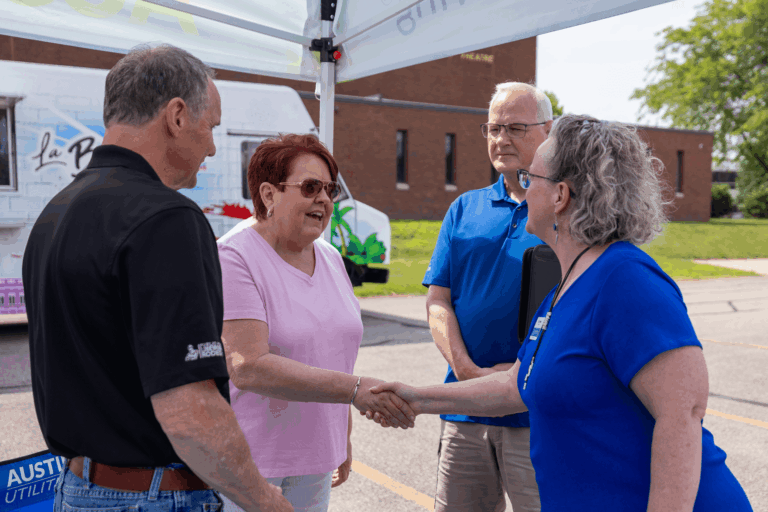
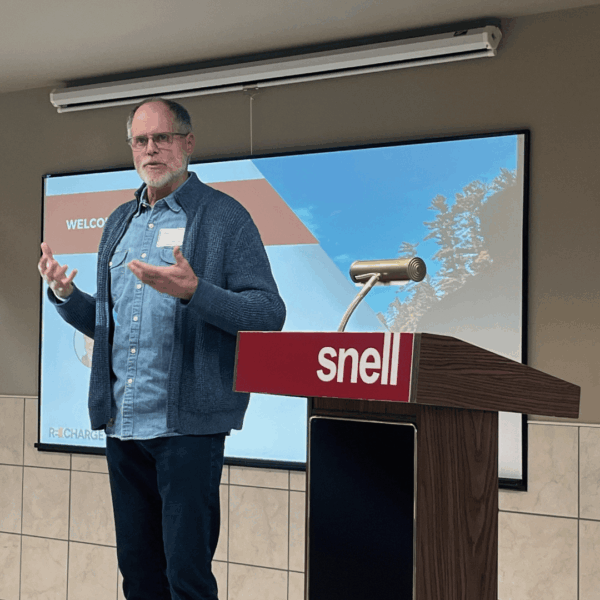
Recharge Austin, Riverland Community College, June 2025

Letter from the CEO

Even in a year that felt hard for many communities, progress in EV adoption and electrification continued in 2025—highlighting the importance of community leadership in shaping what comes next.

At Recharge America, we’ve never believed that progress comes from a one-size-fits-all solution. Real change happens locally: when the right people are in the room, when challenges are spoken about honestly, and when communities have the tools and support to move from ideas to action. That is where we focus our work. 

In 2025, we had the privilege of working alongside leaders and partners across Minnesota and Massachusetts—local governments, utilities, higher education institutions, employers, and community-based organizations—all united by a shared goal: to make electrification real, practical, and accessible. Together, we directly supported four communities, five community-based nonprofit organizations, over 20 higher education teams, and more, helping move electrification from conversation to coordinated action.

And while our work is deeply local, the context is global. Around the world, communities are responding to the same reality: transportation electrification is accelerating, and the decisions made today will shape economic competitiveness, energy resilience, and community health for years to come. The communities that act early will be the communities best positioned to attract investment, build workforce pathways, and benefit from emerging technologies.

From large convenings and working groups to hands-on technical assistance and storytelling that centers real people, we saw again and again what makes the difference: progress moves fast when communities feel ownership.  

We are deeply grateful to the McKnight Foundation, the Olseth Family Foundation, the Schmidtke Family Foundation, the Massachusetts Department of Environmental Protection, the State of Massachusetts, and the Massachusetts Executive Office of Energy and Environmental Affairs, plus our community partners and participants, who trusted Recharge America as a connector, educator, and collaborator throughout 2025. Your belief in this work, and your willingness to show up, share what’s working, and tackle what’s hard, made it a year of real impact.

As we look ahead to 2026, we’re energized by what’s possible. We are excited to take a more holistic view of the electrification ecosystem. We will continue to lead on EVs, while also helping communities connect the dots across systems, partners, and priorities. Communities don’t experience electrification in silos. EVs, charging infrastructure, grid readiness, workforce development, buildings, and energy systems are deeply interconnected. Progress in one area depends on progress in others. 

Progress is continuing, opportunity is widening, and the work ahead lies in helping communities see their options clearly and act on them deliberately.

Kirk Brown
CEO, Recharge America

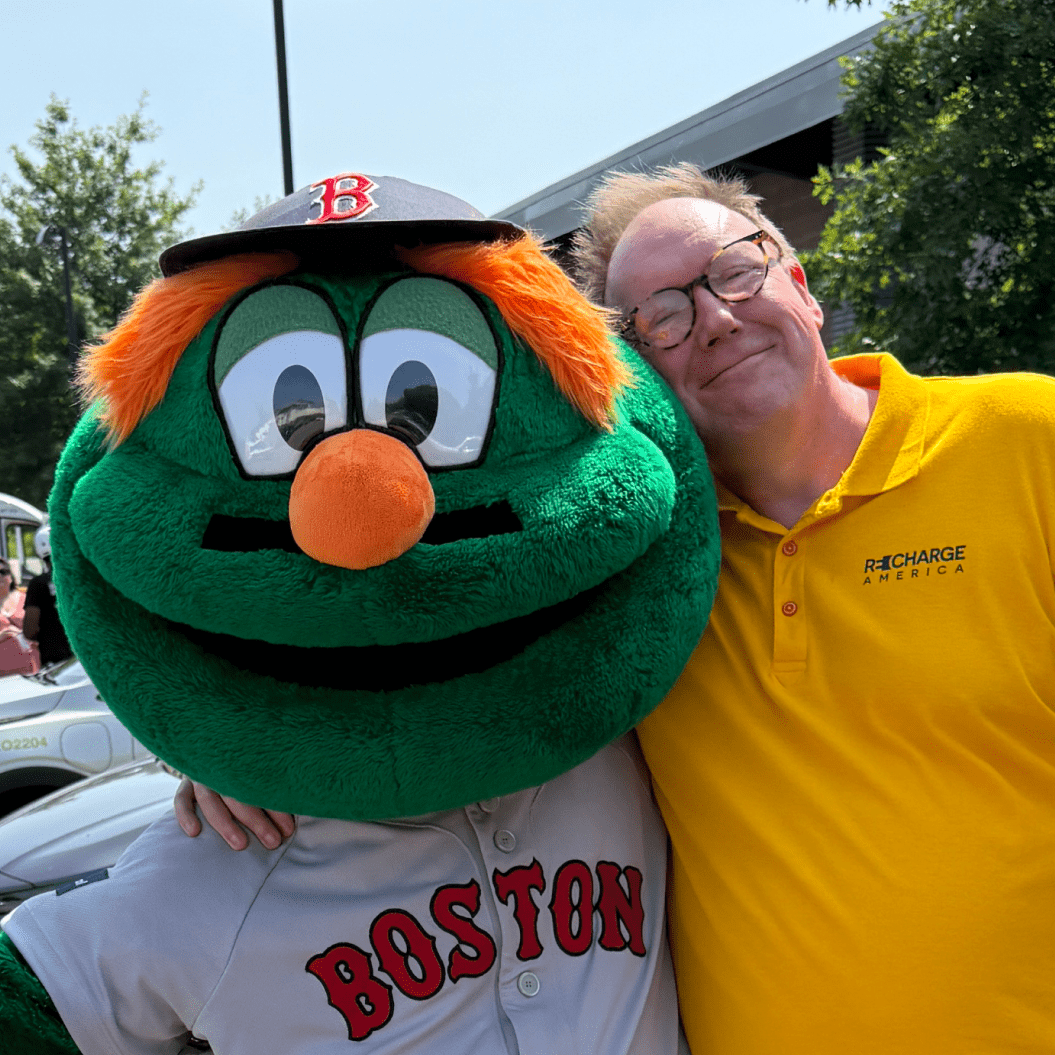
Kirk with the Boston Red Sox’s Wally the Green Monster

Organization Overview

Our Mission

Recharge America is a network of local leaders, businesses, educators, and advocates working together to drive economic growth through widespread electrification.

Our Vision

We imagine a world where everyone benefits from electric technologies powered by clean energy, positively transforming communities and bringing new opportunities for training, jobs, and economic growth. This vision drives us towards a renewed, recharged economy that works for us all.

Our Approach

  • Community‑centered engagement
  • Practical, non‑partisan education
  • Peer learning and collaboration
  • Clear, accessible communications

How Our Work Creates Impact

Recharge America operates at the intersection of information, connection, and action.

We start by listening: understanding local goals, constraints, and opportunities.

We convene stakeholders: bringing together voices that don’t always sit at the same table.

We translate complexity: turning policy, technology, and funding into plain language.

We support action: providing tools, examples, and pathways forward.

Our Board of Directors & Officers

April Bolduc

Founder & President, S Curve Strategies

Anthony Moore

Director of Membership Programs, Black Economic Council of Massachusetts

Eric Brown

Principal, Brownbridge Strategies

Jon Olseth

Director, Olseth Family Foundation

Kirk Brown

CEO, Recharge America

Mike Rea

Founder, ClimeOn

2025 Highlights​

Recharge Mankato

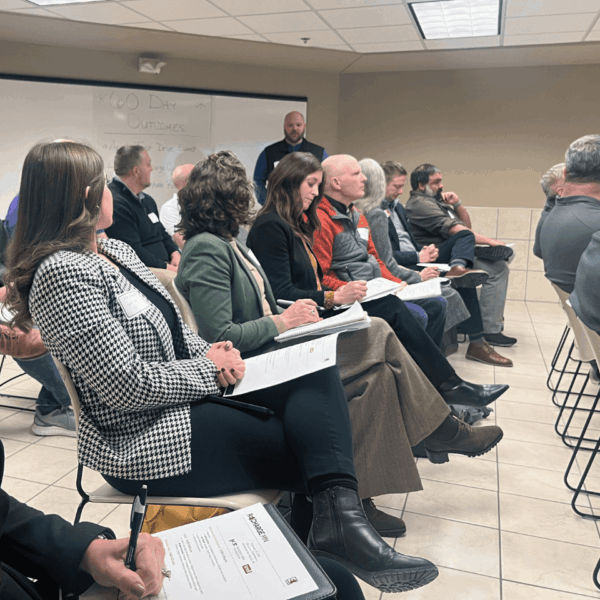
In 2025, Recharge America convened local leaders in Mankato, Minnesota to support the development of the Recharge Mankato Roadmap, a community-led plan that will be published in 2026. Together with partners across the region, we created space for honest conversation, shared learning, and coordinated action, helping the entire community align around practical steps to advance transportation electrification locally.

This work brought together a strong cross-section of the community, including city representatives, local dealerships like Snell Motors, and leaders from local schools and colleges. The Roadmap process emphasized implementation: identifying opportunities, barriers, and near-term actions that reflect Mankato’s local priorities and capacity. 

Once published, this Roadmap will lay the groundwork for infrastructure and community upgrades that will benefit the local economy, create new resources and jobs, and set Mankato up as a proactive leader of the future of electrification. 

This work couldn’t have been accomplished without the support and collaboration of the Mankato Area Foundation and the Olseth Family Foundation. 

Key outcomes included:

  • Cross‑sector collaboration between utilities, municipalities, area businesses, and higher education
  • Peer‑to‑peer learning that reduced duplication of effort
  • Clear next steps for the community at different stages of electrification

Innovation Exchange

In 2025, Recharge America launched its Innovation Exchange working group model, creating a structured, participant-driven opportunity where higher education institutions could dig deeper into shared challenges and move from questions to implementation.

These meet-ups provided:

  • Facilitated discussion and expert insight focused on real-world barriers and solutions
  • Templates, tools, and real‑world examples that participants could adapt on their campuses
  • A trusted peer network for ongoing problem‑solving and collaboration beyond the sessions

Participating institutions included: Harvard University, Riverland Community College, University of Massachusetts, University of Minnesota, Tufts University, White Earth Tribal & Community College, MIT, Minnesota State University, and others.

Community Activations

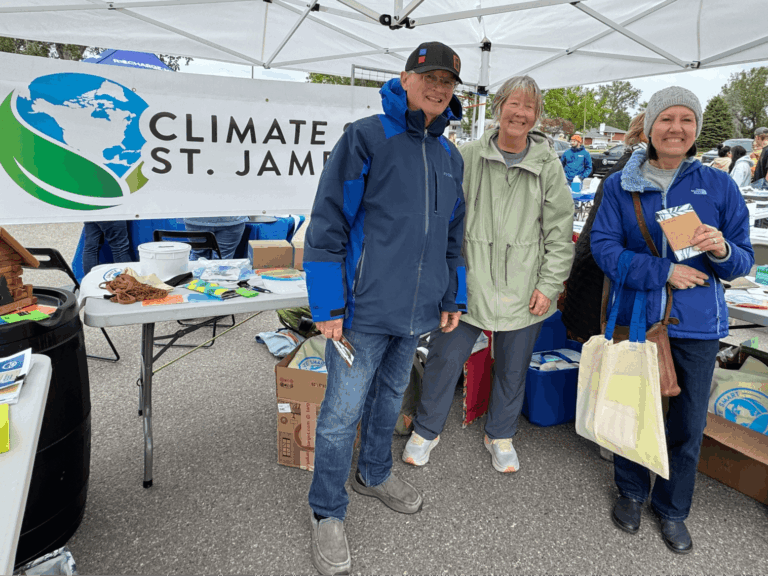
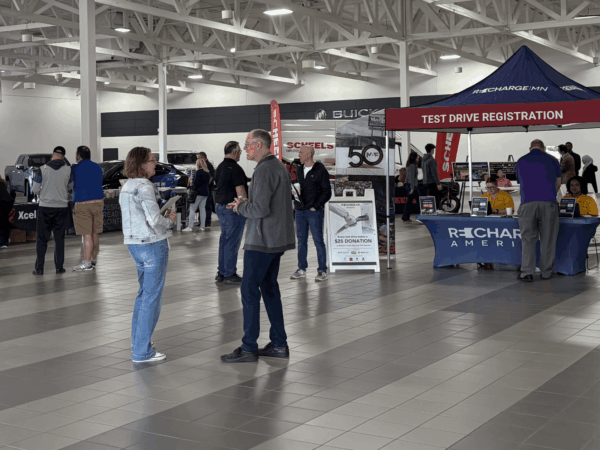
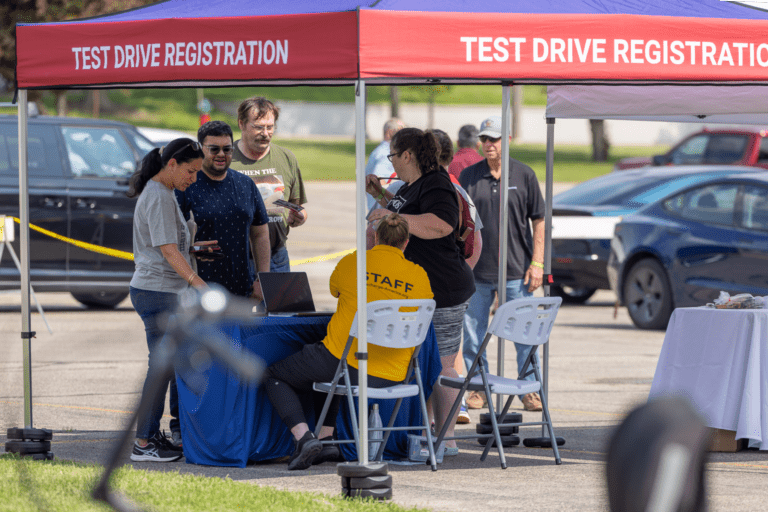
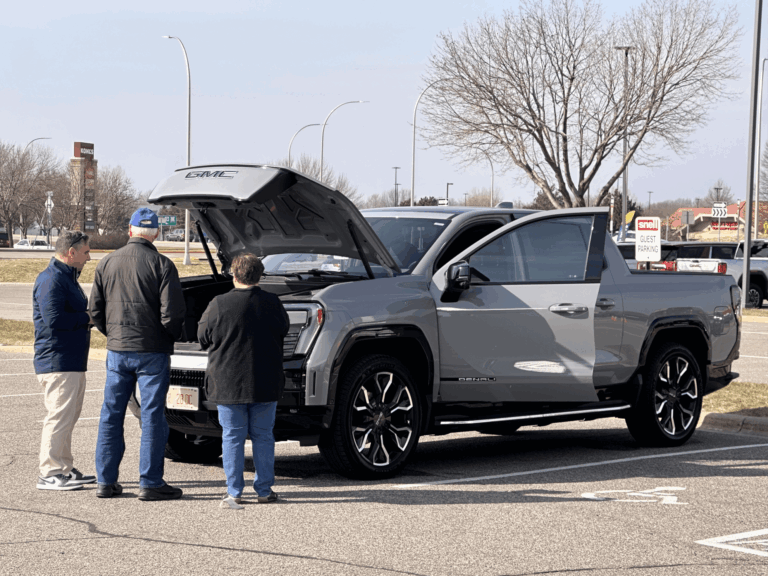
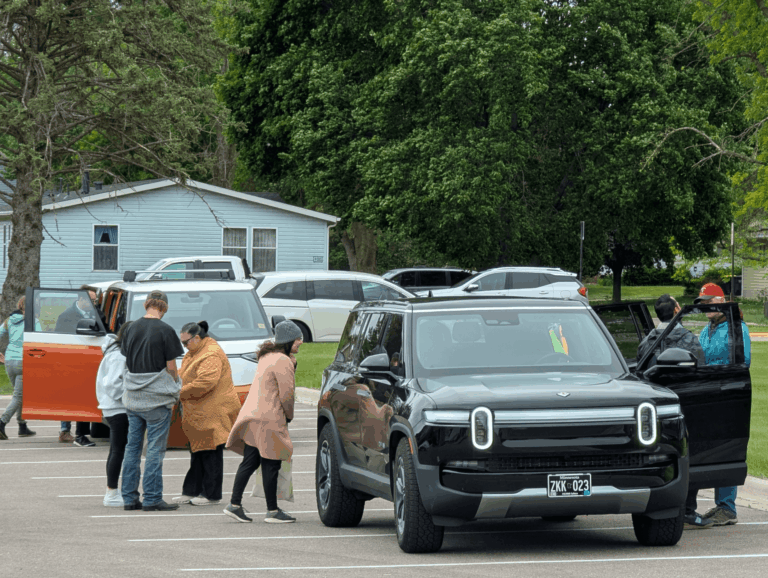
In 2025, Recharge America helped bring transportation electrification into the community through hands-on, public-facing activations designed to build awareness, encourage participation, and strengthen local partnerships. These events made the shift to electrification tangible by giving residents opportunities to learn, ask questions, and see what’s possible in their own communities.

Recharge supported and activated events in Minnesota (Mankato, St. James, Austin) and Massachusetts (Harvard University), working alongside community partners to design programming that reflected local priorities and met people where they are.

These activations included:

  • Community education and outreach that increased local awareness and visibility
  • Opportunities for residents to engage directly with electrification and EV technology
  • Stronger relationships between local leaders and community stakeholders

2025 MN Energy Innovation Summit

Recharge America joined forces with five other leading energy and electrification organizations in Minnesota to create the most comprehensive energy innovation event in the region. Organizing partners included Grid Catalyst, Beneficial Electrification League, the Center for Electrification Opportunity, and the University of Minnesota’s Center for Transportation Studies and Technological Leadership Institute.

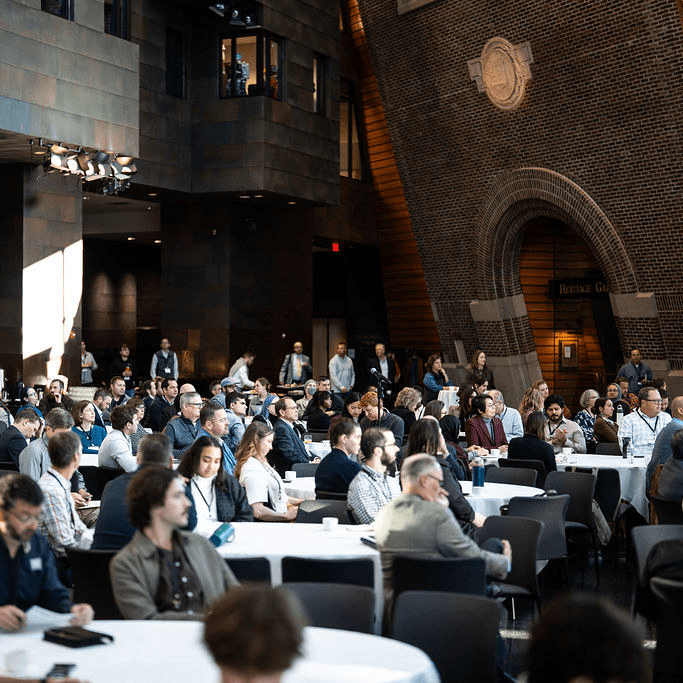
Hosted at the University of Minnesota’s McNamara Alumni Center, the inaugural MN Energy Innovation Summit featured a day exploring cutting-edge technology, insightful presentations, and invaluable networking opportunities with nearly 400 leaders driving Minnesota’s future.

A notable event session was Mapping an Electric Future: Mankato’s Example, a panel discussion hosted by Recharge America’s Kirk Brown and featuring guests Jon Olseth (Olseth Family Foundation) and Ashley Eimer (Mankato Area Foundation). The session showcased how Mankato is building a practical, community-driven roadmap for transportation electrification and how other cities can replicate the model. 

Recharge America will lead the planning efforts for the 2026 edition of the annual summit, set for Monday, October 19, 2026.
Impact By the Numbers

Across our Recharge America Recognition Program participants, 2025 was a year of inspiration and investment in energy innovation solutions. According to feedback received by Participants in our annual survey, here’s the impact they made this year:

  • Over 50% of responding Participants installed new EV charging ports
  • Over 60% of responding Participants added electric vehicles to their fleets
  • 90% of responding participants hosted or participated in EV, electrification, workforce, or grid-related community activities
  • Over 80% of responding Participants  hosted an employee-focused EV education event

Program Participants

Massachusetts

Minnesota

Stories from Our Participants

City of St. James: Building Momentum Through Engagement and Planning

In 2025, the City of St. James focused on learning, engagement, and long-term planning as it explored what transportation innovation could look like for its community.

While the city did not install new EV charging stations or add electric vehicles to its fleet this year, it took an important step forward by participating in an EV ride-and-drive event. These hands-on experiences helped city leaders and community members build familiarity with electric vehicles, ask practical questions, and better understand how emerging transportation options could fit local needs.

Looking ahead to 2026, St. James is undertaking an Active Transportation Plan to help guide future transportation priorities. This planning process will play a key role in shaping how the city approaches mobility, access, and infrastructure investments, ensuring that next steps are informed, community-driven, and aligned with local goals.

For St. James, 2025 was about laying the groundwork, building awareness today to support thoughtful decision-making tomorrow.

Connexus Energy: Removing Barriers to EV Adoption

In 2025, Connexus Energy focused on making electric vehicle ownership simpler and more accessible for its members.

The cooperative added electric vehicles to its fleet and invested heavily in education and workforce development, hosting lunch-and-learn sessions, webinars, and general electrification education opportunities throughout the year. These efforts helped build internal expertise while supporting member understanding of EV technology and charging considerations.

A key highlight of the year was Connexus Energy’s leadership of a research initiative to develop a residential EV rate tariff that does not require a secondary meter. This work was driven by real-world challenges facing members in multifamily housing and HOA-restricted communities, where installing additional meters can be costly or impractical. The research laid the foundation for pilot activity and further rate analysis planned for 2026.

Looking ahead, Connexus Energy’s goals are clear and member-focused: become the easiest utility to own an EV with, introduce a residential EV rate without a secondary meter, and develop tailored charging rate structures for both commercial DC fast charging and Level 2 charging. Together, these efforts position Connexus Energy as a leader in practical, customer-centered electrification solutions.
University of Massachusetts Boston: Expanding Campus Charging and Workforce Readiness

In 2025, the University of Massachusetts Boston made significant investments in charging infrastructure and education to support the growing demand for electric and micromobility options on campus.

Over the course of the year, UMass Boston expanded its EV charging network through multiple installations, adding new ports in January and May and completing a major installation late in the year. In total, the university installed dozens of new EV charging ports across campus, improving access for students, faculty, staff, and visitors.

Beyond infrastructure, UMass Boston also advanced workforce development and general electrification education efforts, helping prepare students and campus stakeholders to engage with emerging transportation and energy technologies.

In November, the university further broadened its mobility strategy by installing 13 Saris Power Posts, enabling charging for up to 26 micromobility devices and supporting more flexible, low-emission transportation options.

Looking ahead to 2026, UMass Boston plans to closely monitor charging usage and campus needs, ensuring future investments remain responsive, data-driven, and aligned with the evolving transportation landscape.

Energy New England: Scaling EV Education Across Massachusetts Communities

In 2025, Energy New England focused on expanding electric vehicle awareness and education across Municipal Light Plant communities throughout Massachusetts.

While the organization did not install new charging infrastructure or add vehicles to its fleet, its EV team played a critical role in on-the-ground and virtual engagement. Over the course of the year, Energy New England supported more than 40 EV-related events through the MOR-EV program and in partnership with Municipal Light Plants, reaching residents, businesses, and community leaders statewide.

These efforts included EV ride-and-drive events, car showcases, lunch-and-learn sessions, webinars, and general electrification education. Notably, Energy New England coordinated an online EV event that drew more than 250 participants from a single Massachusetts community, demonstrating strong interest in accessible, trusted information.

Beyond events, Energy New England continued to provide ongoing support through online EV resources, regular newsletter content, and an EV Help Desk that helps residents and businesses navigate questions around vehicles, incentives, and charging.

Looking ahead to 2026, Energy New England plans to further grow and expand EV awareness, rebate education, and support programs across Municipal Light Plant communities — ensuring that more Massachusetts residents and businesses have the knowledge and tools needed to participate.

Town of Amherst: Pairing Community Impact with Infrastructure

In 2025, the Town of Amherst advanced its transportation electrification efforts by combining community engagement with targeted infrastructure and fleet investments.

The town expanded local charging access by installing new EV charging ports, including two single-port DC fast charging stations, helping improve on-street charging availability. At the same time, Amherst added electric vehicles to its municipal fleet, continuing its commitment to reducing emissions and modernizing local operations.

A key focus of the year was community input. Amherst conducted a public survey to better understand resident preferences for on-street charging locations, ensuring that future infrastructure investments reflect how and where people actually travel and park.

Looking ahead to 2026, the Town of Amherst plans to continue greening its municipal fleet and expanding EV charging infrastructure, building on a foundation of data-driven planning and community-informed decision-making.

indiGO Tech: Scaling Zero-Emission Transportation from Pilot to Launch

In 2025, indiGO Tech accelerated its transition from pilot activity to large-scale deployment, making significant investments in both infrastructure and vehicles.

The company expanded its charging network by installing more than a dozen new EV charging ports and added more than 20 electric vehicles to its fleet, strengthening its operational readiness for zero-emission transportation services. Alongside these investments, indiGO Tech actively engaged communities through EV ride-and-drive events, vehicle showcases, workforce development initiatives, and general electrification education.

These hands-on activities helped introduce electric vehicles to new audiences while building awareness of how zero-emission transportation services can operate at scale. Throughout the year, indiGO Tech also shared progress and insights through ongoing communications and public engagement.

Looking ahead to 2026, indiGO Tech plans to launch its branded electric vehicles and zero-emission transportation services beginning in Massachusetts in the first quarter, with national expansion to follow. This next phase marks a shift from preparation to delivery — bringing clean, reliable transportation options directly to communities.

Global Lease Group: Advancing Fleet Electrification Through Partnership

In 2025, Global Lease Group continued to expand its role as a fleet electrification partner, supporting clients across commercial, nonprofit, educational, and governmental sectors.

The company added more than 20 electric vehicles to its fleet, reflecting a growing commitment to helping organizations transition to electric transportation. While Global Lease Group does not directly install charging infrastructure, it played an active role in hands-on education and engagement, participating in EV ride-and-drive events, vehicle showcases, and general electrification education throughout the year.

A notable highlight of 2025 was Global Lease Group’s support for clients planning and implementing more advanced electrification strategies, including the addition of Class 8 battery-electric tractor vehicles. These efforts demonstrate how fleet electrification is extending beyond light-duty vehicles into heavier-duty applications.

Looking ahead to 2026, Global Lease Group aims to continue serving as a trusted resource and fleet management partner, helping organizations move toward stronger environmental stewardship through informed, practical electrification decisions.

Boston University: Advancing Fleet Electrification and EV Program Innovation

In 2025, Boston University continued making steady progress toward its long-term goal of electrifying campus transportation and expanding access to electric vehicle charging.

The University installed additional EV charging infrastructure, adding several new charging ports throughout the year. BU also strengthened its fleet transition by adding multiple EVs, including the replacement of two cargo vans with electric fleet vehicles, supporting both emissions reduction and operational efficiency.

Beyond infrastructure and fleet upgrades, BU participated in a range of educational and engagement activities, including lunch-and-learn sessions, webinars, and general electrification education. Transportation Services employees also continued using electric bicycles for tasks formerly completed with pickup trucks, reflecting a broader shift toward lower-emission mobility options across campus operations. 

BU also made a notable program change in 2025 by updating its preferential parking program to prioritize plug-in electric vehicles, helping reinforce EV adoption through policy and incentives, not just infrastructure.

Looking ahead to 2026, Boston University plans to review its EV charging program and commercial pricing strategy to ensure it aligns with climate action goals and community needs. The University also anticipates hosting an EV user meet-up and information session, continuing participation in Recharge America’s Innovation Exchange virtual meet-ups, and providing EV program data to student project teams to support training and learning in data science and machine learning.

Partners + Supporters

Recharge America’s work is made possible through collaboration. We extend our sincere thanks to:

Looking Ahead: 2026 + Beyond

As Recharge America looks to 2026 and beyond, we’re excited to expand our work to support the entire electrification ecosystem, recognizing that transportation, infrastructure, workforce, and energy systems are deeply interconnected and most effective when advanced together.

In the coming year, Recharge America will:

  • Deepen engagement in existing partner states
  • Expand to new states and communities with the support of existing partners (stay tuned for an exciting announcement!)
  • Expand networking and learning opportunities by launching a new EV Ecosystem Innovation Exchange cohort, while continuing to invest in our higher education participants with our Higher Education Innovation Exchange meetings
  • Continue elevating community‑driven stories of progress that highlight real leadership and local impact
  • Activate communities through in-person and virtual outreach, with our 2026 events calendar coming soon
  • Strengthen tools and resources  that help communities move from planning to implementation

We believe the next phase of electrification work is less about convincing and more about supporting communities as they take their next steps. As we finalize our 2026 community outreach schedule, we’re actively seeking new partnerships with communities, organizations, and leaders ready to engage.

Interested in working together? Connect with us!

Skip to content
Recharge America Logo, color deep red and blue, horizontal version
Privacy Overview

This website uses cookies so that we can provide you with the best user experience possible. Cookie information is stored in your browser and performs functions such as recognising you when you return to our website and helping our team to understand which sections of the website you find most interesting and useful.