Minnesota’s energy future won’t be shaped by technology alone. It will take collaboration among utilities, businesses, schools, communities, policymakers, and the people working every day to put innovative ideas into practice.
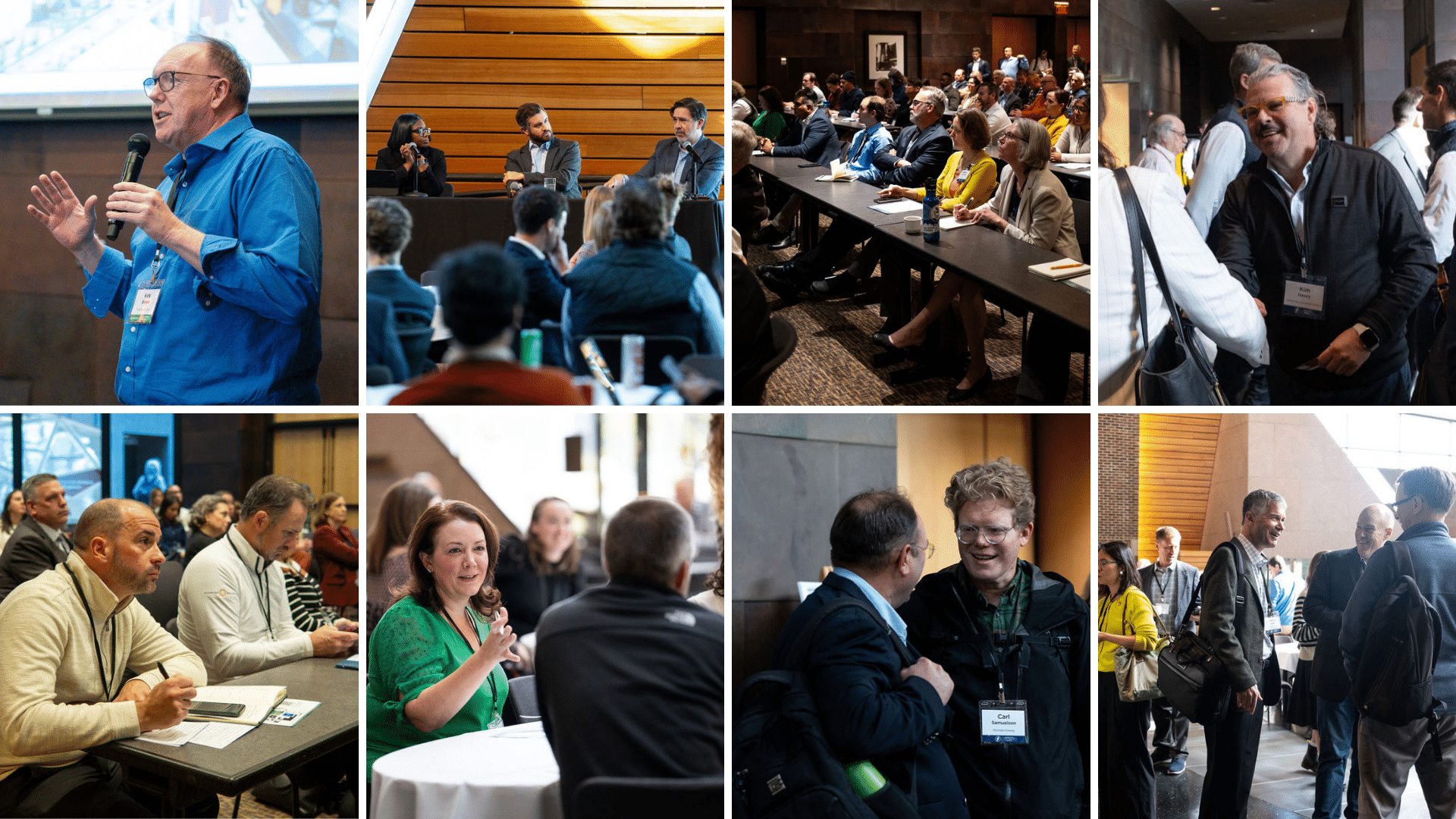
That spirit of collaboration was on display at this year’s Minnesota Energy Innovation Summit, hosted at the University of Minnesota’s McNamara Alumni Center. Powered by Xcel Energy, the Summit brought together people from across Minnesota’s energy ecosystem to explore emerging technologies and consider what it will take to accelerate the state’s energy transition.
Big questions about the future of energy
The Summit opened with a keynote address from Jigar Shah, followed by a panel featuring Shah, Gregg Mast, and Lissa Pawlisch that framed the challenges and opportunities facing Minnesota’s energy sector and set the stage for a day of sessions focused on solutions taking shape across the state.
Innovation is happening in communities across Minnesota
Throughout the day, breakout sessions explored how communities, institutions, and businesses are approaching energy challenges in practical and sometimes unexpected ways. School solar projects and community energy investment strategies illustrated how local institutions can help advance broader energy goals. Other sessions explored the role of rural electric cooperatives, fleet electrification, and new approaches to charging infrastructure. One session highlighted GoMarti, an innovative mobility initiative serving communities beyond the Twin Cities, while another introduced attendees to the potential for mobile robotic technology to deliver EV charging where it is needed. These examples showed how transportation solutions can adapt to different communities and use cases.
Sessions on agricultural electrification and next-generation energy technologies introduced attendees to projects and ideas that have already seen success in projects in Minnesota and elsewhere. Discussions about industry partnerships and connecting talent to opportunity highlighted another important part of the transition: ensuring people and organizations have the skills, relationships, and resources needed to support changing energy needs.
All sessions reminded us that energy innovation takes many forms. Sometimes it means deploying an established technology in a new setting. Other times, it means rethinking how a service is delivered, connecting previously separate partners, or exploring a technology that is just beginning to find its place in the market.
Turning ideas into action
The conversations throughout the Summit also reinforced a broader lesson: sharing what works matters.
Communities don’t need to start from scratch when exploring clean energy solutions. Learning from existing projects and hearing directly from people implementing them can help others make informed decisions about their own next steps.
That was evident in attendee feedback. Respondents highlighted the value of learning about initiatives underway across Minnesota, discovering ideas they could bring back to their organizations, and making new professional connections.
One attendee said they left with new connections, story ideas, and inspiration for their team’s work. Another emphasized the value of seeing firsthand projects and models that could be replicated elsewhere in the state.
These connections and insights can help move innovation beyond a conference room and into communities.
Building on the momentum
At Recharge, we believe meaningful progress happens when communities have access to the information, relationships, and resources they need to act. The Minnesota Energy Innovation Summit is one way we bring people together to share knowledge and strengthen the partnerships that support local energy innovation.
The Summit also reflects the importance of continued learning. As technologies evolve and communities pursue different priorities, it’s valuable to create spaces where people can exchange practical experiences and ask questions.
Minnesota’s energy future will be shaped by the decisions made across its communities, businesses, schools, farms, and utilities, and everywhere in between. Connecting the people making those decisions is an important step toward turning shared ambitions into tangible results.
Thank you to our speakers, attendees, sponsors, and partners for contributing to this year’s Summit. We look forward to building on these conversations and continuing to support the people putting energy innovation into action across Minnesota.